


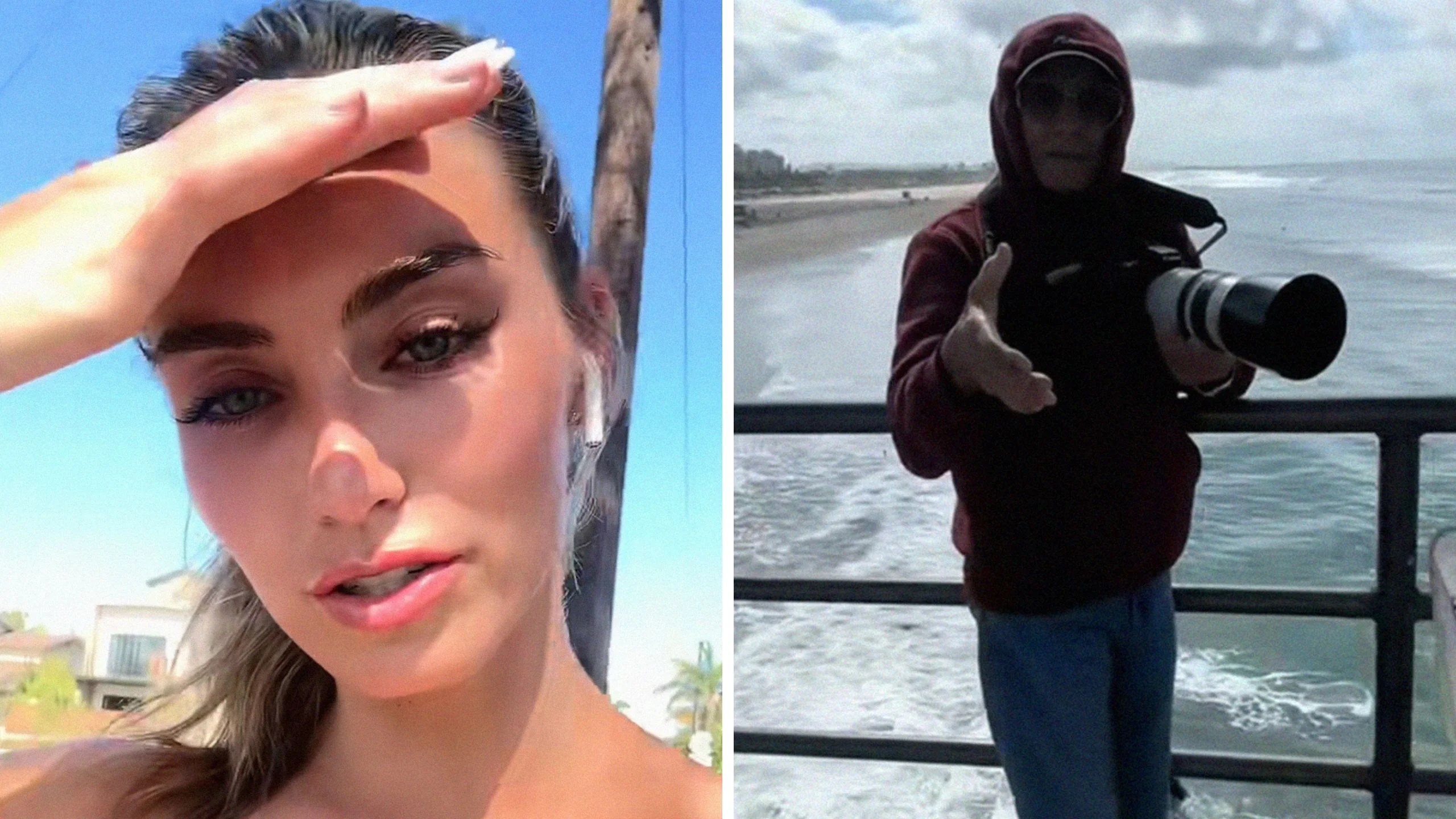
“That’s why I don’t run.”
A woman has sparked debate over online privacy after sharing she was one of many subjects of a male photography Instagram page.
On May 19, Orange County, California resident @joeygo222 posted a TikTok sharing a surprising interaction she had with a photographer who took a photo of her while she was running. As of this writing, the video has been viewed 1.2 million times.
What happened when the woman faced the photographer?
“For the past few years, this guy had been taking pictures of me running on the pier, and I finally got up the courage to ask him what he was doing with these pictures,” she begins in the video. “It turns out he had been posting these photos on Instagram for years.”
She then filmed an interaction in which she asked the man about the photos, in which he shared that he had posted photos of runners and surfers to an Instagram page dedicated to his photography.
She then included screenshots of photos he had posted of her during his runs over the past few years.
Commentators were divided over whether his actions were ethical. “This is a rare example of weird but harmless,” the top comment said. “He had a passion for photography and took wonderful photos.”
“He loves photography and these photos look normal and nothing creepy about you running in public,” another added.
Did the photographer cross any legal lines?
In the United States, especially in California, people generally don’t expect privacy in public places. That means photographing people in places like piers, sidewalks, parks and beaches are generally protected by the First Amendment. This protection is basically effective as long as the photographer isn’t intruding or using hidden surveillance where privacy is required, such as a bathroom or home.
The situation most likely to blur legal lines is when photography escalates into tracking. Under California law, stalking needs to be repeated and accompanied by credible threats that cause others to fear for their safety. If a pattern of behavior becomes extremely distressing, a civil harassment restraining order may apply even if there is no explicit threat. However, courts generally err on the side of caution and not restrict street photography because the subject is uncomfortable. This is especially true when the image was taken in a public place.
There is also a separate but related issue of “right of publicity”, which governs the commercial use of someone’s likeness. However, most street photography accounts fall into the category of expressive or artistic use. This is especially true when images are shared on platforms without direct monetization tied to a specific personal identity.
AllHipHop reached out to @joeygo222 via Instagram DMs and TikTok comments section for comment.
@joeygo222
Haha 🤣
♬ Original Sound – Joe
