

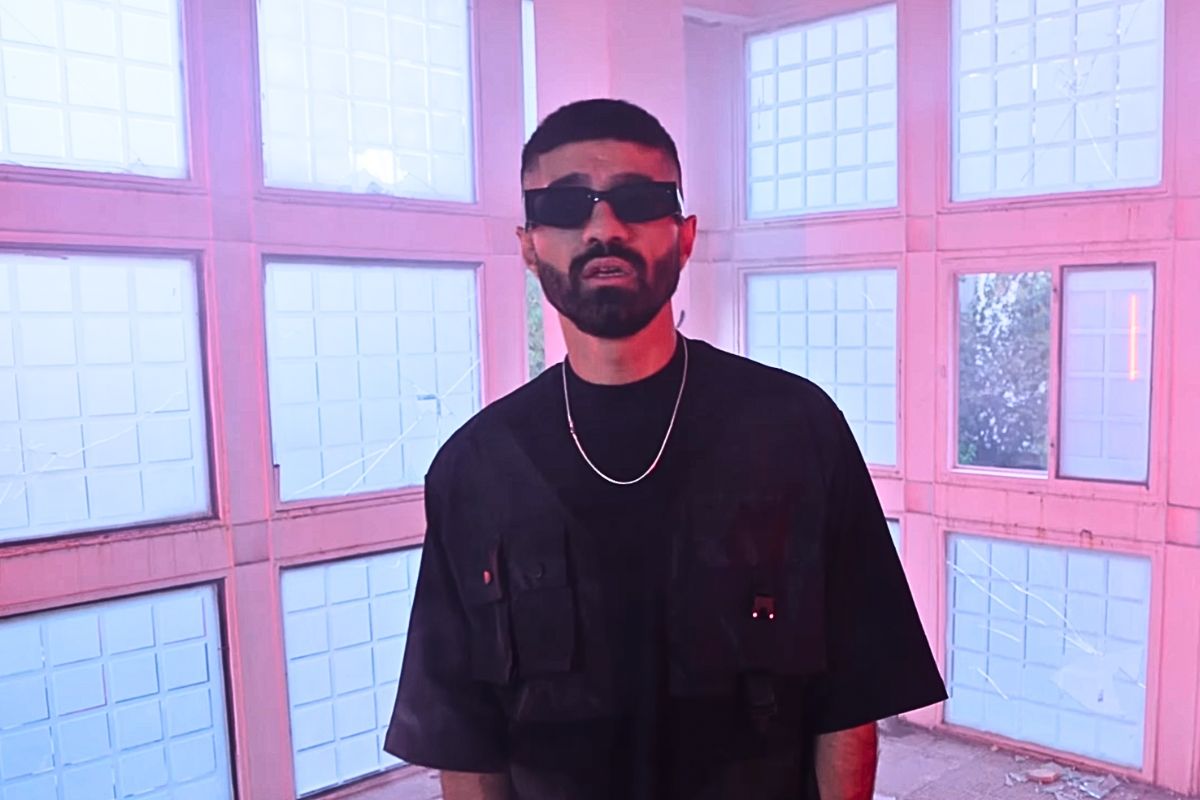
Rapper Meraj Tehrani witnessed what he said was a street carnage during recent protests that left thousands dead across Iran.
In early January 2026, when demonstrations broke out across the country, the British artist returned to Tehran on business. Tehrani told Sky News he saw millions of people united for the first time in Iran’s history. The protests began over economic concerns but quickly turned into demands for regime change.
The Revolutionary Guards responded with deadly force that shocked even seasoned protesters.
“At first I don’t think the government believed that so many people were coming out, they were surprised,” Dehlani explained. The internet was immediately shut down as authorities tried to control the flow of information.
The rapper described the night of Friday, January 9, as the turning point when Iran began its mass killings.
The Revolutionary Guards, armed with machine guns, began shooting at the protesters at random. Bodies were left in the streets as a warning to others considering taking part in the demonstrations.
“That’s when everything got serious,” Tehrani said of the Revolutionary Guard deployment. “It turned into a street massacre.”
Tehrani believes that foreign forces, including Iraqi militias and Popular Mobilization Forces, helped Iranian authorities suppress the protests. These warriors know how to kill effectively by targeting the head and chest. The guards who carried out the killing looked different from normal Iranian security forces.
“In any country, one life matters and thousands of people are killed in very aggressive ways,” he said.
Supreme Leader Ayatollah Ali Khamenei acknowledged on Saturday that “thousands” of people had died during the protests. The American Human Rights Activists news agency confirmed 3,090 deaths, including 2,885 protesters. The death toll continues to rise as authorities continue their crackdown.
Tehrani’s experience reflects the dangerous reality faced by Iranian artists who speak out against the regime. Since 2022, multiple rappers have been sentenced to death for supporting the protests.
Toomaj Salehi was sentenced to death for “corruption of the planet” in April 2024, before Iran’s Supreme Court overturned the death sentence in June. The metalworker-turned-rapper spent more than 250 days in solitary confinement for writing protest songs.
Iran cracks down on rappers, one arrested, another sentenced to death
Saman Yasin faces similar charges and could be executed for her music in support of the Women, Life, Freedom movement.
Grammy winner Shervin Hajipour has been sentenced to three years and eight months in prison for his song “Baraye,” which became the soundtrack to the protest movement.
Rapper Vafadar was released from Tehran’s notorious Evin prison in January 2025 after serving time on protest-related charges. Mehdi Yarrahi has also faced persecution for his music in support of protesters.
These cases illustrate how Iran systematically targets artists who challenge authority through their music. Rappers face torture, forced confessions and the death penalty for expressing dissent through art.
Tehrani received threatening messages on social media and knew he could not return to Iran safely.
“If I went back, they would catch me and hang me,” he admitted.
The rapper criticized the international community’s silence, asking EU leaders and British Prime Minister Keir Starmer where they stood.
Tehrani fled Iran via Türkiye and now lives in the UK, where he continues his music career. His recent albums include Gange Mojaz, SABZ, Sharaf and CHANGI,Z, and are available on streaming platforms.
