


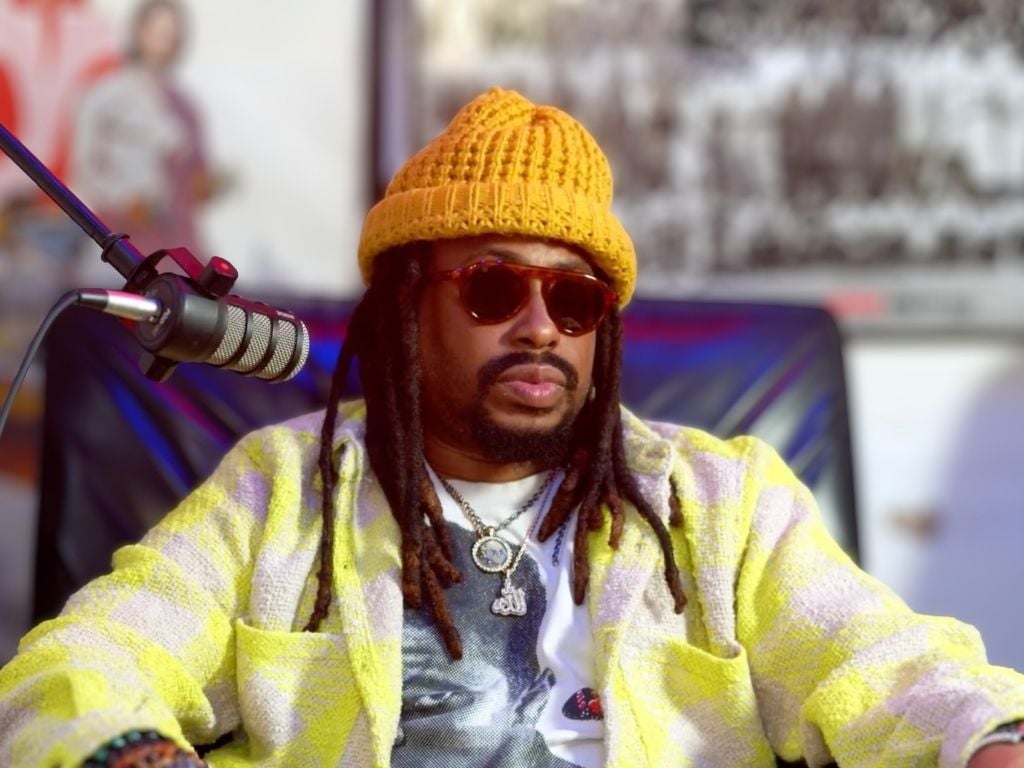
Raheem DeVaughn says losing his father, going to therapy and mastering his independence changed his perspective on music, legacy and purpose.
Raheem DeVaughn on growing up, grief, independence and the future of R&B
Few artists represent Washington, D.C.’s musical identity as consistently and purposefully as Raheem DeVaughn. DeVaughn rose to prominence during the neo-soul revival of the early 2000s alongside artists such as Anthony Hamilton, Eric Robertson and Mousik Soulchild, establishing his reputation as an independent-minded singer who balanced romance, radicalism and cultural pride. His 2005 debut album, The Love Experience, helped catapult him into a generation determined to retain the emotional core of R&B while hip-hop continued to dominate the mainstream conversation.
Beyond music, DeVaughn has earned a reputation as a community advocate. His LoveLife Foundation, established in 2012, focuses on domestic violence awareness, education and community empowerment. His activism reflects a lineage of socially conscious R&B sounds that stretches back to Marvin Gaye and Stevie Wonder.
Now, more than two decades into his career, DeVaughn is entering a new phase that he says is defined by mastery, independence and purpose. In a conversation with AllHipHop’s R&B expert Rasheeda Wallace and Slops, he talks grief, therapy, direct-to-consumer independence, why some veterans misunderstand today’s R&B landscape, and why he thinks this era should be about giving artists roses while they can still receive them.
Portraits of artists are less about fame and more about influence.
Raheem DeVaughn: Ironically, that was before I started the foundation. That was around 2006. One of the first initiatives was domestic violence because I was getting so many calls asking me to do community speaking engagements.
Prince George’s County at one time ranked number one for domestic violence calls, and it was right in my backyard. So I have always supported anti-domestic violence groups. Starting the foundation in 2012 gave me the opportunity to be really down to earth, direct and non-political.
AllHipHop: What life experiences have truly changed you as a man and artist?
Raheem DeVaughn: Perhaps the most defining event was the birth of my children and the death of my father. These things make you respect time.
I always talk about what I call the three greatest gifts. The gift of time, because from the moment we are born, we have no time. The gift of decision and free will because every choice affects you and others. The third gift is people. Everyone we meet is a gift.
AllHipHop: How did losing your father affect you emotionally?
Raheem DeVaughn: I was the last person to bathe and wrap him before he was buried. After something like this happens, social media comments have no effect on me. After that, there was nothing I couldn’t handle.
This actually prompted me to go to therapy for the first time in my life. I’m one of those people who thinks I don’t need it. But therapy helps a lot. A free and clear mind makes creating easier.
AllHipHop: You recently revisited one of your classic records. What made you take the risk?
Raheem DeVaughn: This is not an easy task. I knew I would be scrutinized. Most artists don’t touch their classics. But I stayed in the studio and probably spent a few months on it.
I started reworking my own songs, like I would cover Janet Jackson or the Isley Brothers. It either had to feel equally fulfilling, or it had to make the original feel like a demo. That’s the standard.
AllHipHop: At this point in your career, what drives you creatively?
Raheem DeVaughn: That’s the 10,000-hour effect. I’ve been in the studio long enough. That’s enough time on stage. Surround the producer long enough. With that comes a mastery.
I know how to get the right people into a room and walk out with something people will love. This comes from experience.
AllHipHop: What do you hope people feel when they hear this album?
Raheem DeVaughn: I want people to have sex. I want intimacy. I want it to feel like audio ecstasy.
I want people to play Uno, spades, date night. I threw it away around Valentine’s Day, but every day can be a love day. I wanted it to feel like five slow riffs in a row on a Jodeci album.
AllHipHop: You’ve been very vocal in advocating for direct-to-consumer independence. Why is this important now?
Raheem DeVaughn: I have always been a direct-to-consumer artist. Even in the early days, we pressed CDs ourselves and put them in stores.
Now I encourage artists to sell directly to fans first. Don’t just pay pennies to put your music on a DSP without putting it behind a paywall first. This direct support will serve as seed money for your marketing and promotions.
AllHipHop: What is your honest opinion on the current state of R&B?
Raheem DeVaughn: Some OGs are just bitter. Some people don’t understand the changing of seasons.
Some music might sound better. Some are not positive frequencies. But I’m not here to condemn anyone. You just have to stick with what you put in and own it.
AllHipHop: Who do you think is driving R&B today?
Raheem DeVaughn: I love what Brent Faiyaz is doing. I heard growth. I also like Ari Lennox. I remember seeing her in the studio very early on and even then she was a beast.
I’ve always been biased against the DMV. Just like Snoop represents the West Coast and Tip represents Atlanta. We must celebrate our own.
AllHipHop: What do you think is missing from the conversation between generations of artists?
Raheem DeVaughn: This was supposed to be the decade of the Rose. We are all getting older. You are either old and disaffected or you celebrate what is happening now.
If you see something exciting, click Like. Share it. Give the game. I had a phone call with some artists recently that was supposed to be twenty minutes but turned into two hours because they needed information and motivation.
AllHipHop: Why is mentorship so important to you?
Raheem DeVaughn: If it hadn’t been for people like DJ Jazzy Jeff and others showing me the game when I was younger, I wouldn’t be where I am today. They could have taken advantage of me, but they didn’t.
So I feel a responsibility to pass this knowledge on. Hopefully 15 or 20 years from now we’ll see one of these young artists doing the same thing.


Photo credit: @Iamcomplex
