


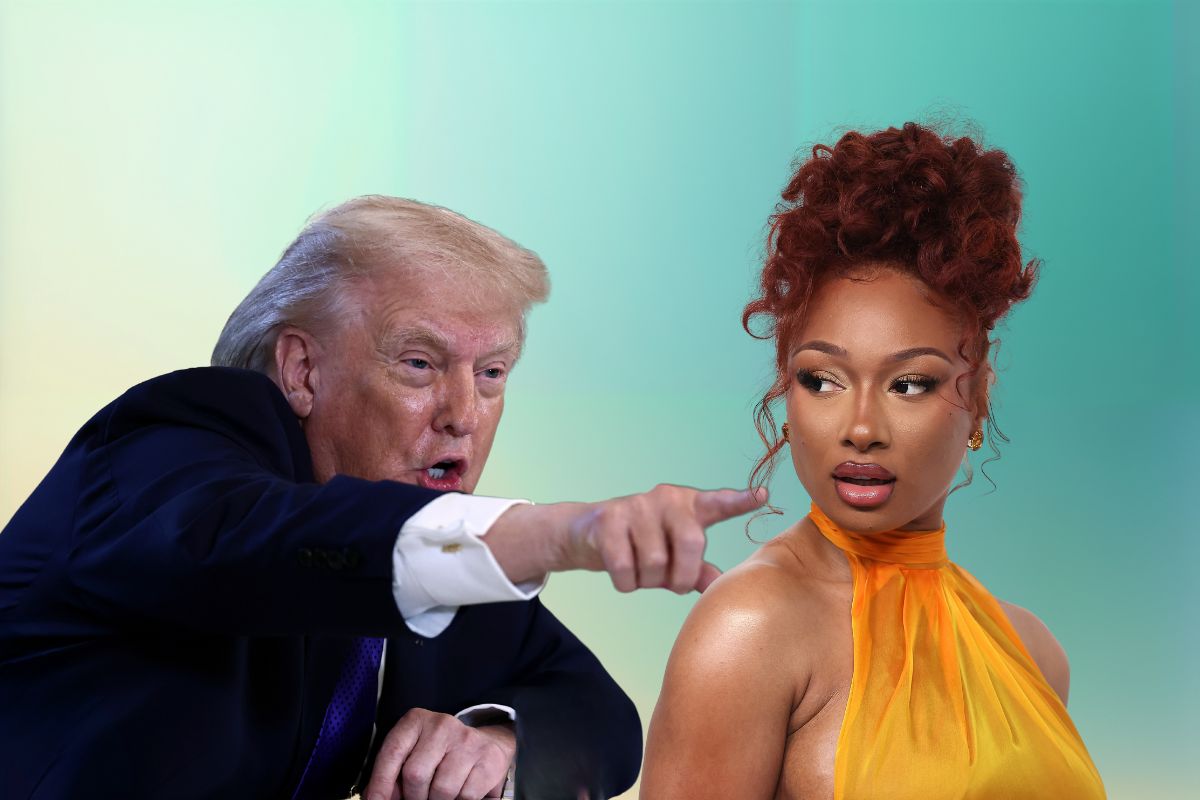
Megan Thee Stallion just got legal support from one of the most famous figures in modern courtroom history: the powerhouse lawyer who helped bring down Donald Trump.
Roberta Kaplan, an attorney representing author E. Jean Carroll in his defamation and sexual assault lawsuit against Trump, filed a blistering amicus brief in federal court siding with Meghan.
She supports Meghan in her fight against Milagro “Milagro Gramz” Cooper, a Texas blogger who was found liable for spreading false, sexually explicit videos of the rapper generated by artificial intelligence.
Kaplan doesn’t mince words. She argued that Cooper’s behavior of retweeting and promoting Meghan’s pornographic deepfake to her thousands of followers was not “free speech.”
“This case demonstrates how technological advances can amplify common forms of online harm, including harm based on sexually explicit images. Deepfake sexual images do not contribute to the public debate; they reproduce patterns of intimidation and humiliation that the law has long considered unprotectable,” explains Roberta Caplan.
Kaplan said it was harassment, plain and simple. Under Florida law, this abuse is not protected by the First Amendment. The document marks another chapter in Kaplan’s long-running campaign to hold the powerful and reckless accountable for weaponizing lies.
She was also the attorney who obtained two major defamation verdicts against Trump on behalf of Carroll, totaling more than $83 million.
In that case, jurors found Trump acted with malice when he defamed Carroll after she accused him of sexual assault. A federal appeals court upheld the decision last year, making it one of the most significant defamation rulings in decades.
Now, Kaplan has made it clear that digital defamation, especially one powered by artificial intelligence, should be treated the same.
In her briefing, she compared deepfakes to other prohibited forms of abuse, such as revenge porn or child sexual exploitation material, saying all of these use technology as a “mechanism of harm.”
The connection between Carroll’s and Megan’s cases goes beyond Kaplan’s signature. Both works center on women forced into public fights: one against a former president, the other against a YouTube gossip blogger.
Both women endured online harassment and suspicion until juries ultimately sided with them, with victory resting on the same legal basis: defamation law recognizing that free speech cannot protect intentional, damaging lies.
Megan Thee Stallion filed a defamation lawsuit in 2024 after Cooper repeatedly targeted her online, spreading false narratives and amplifying deepfake videos claiming to show Megan engaging in sexual acts.
Meghan’s team said the posts caused emotional distress, professional repercussions and relentless public humiliation. In December, a Miami jury unanimously found Cooper liable for defamation and intentional infliction of emotional distress.
During the trial, Megan Thee Stallion testified that the false video damaged her mental health.
Her agent described her breaking down and crying after seeing the video, while her psychologist diagnosed her with post-traumatic stress disorder.
“I really don’t care if I live or die,” she told jurors.
The jury awarded Megan about $75,000, which was later reduced slightly after post-trial motions, but Cooper still called it a “victory” and boasted that it was not a “million-dollar fine.”
This attitude, Kaplan argued, is exactly why injunctions are necessary: to stop repeat behavior that continues to cause harm long after sentencing. Kaplan’s filing notes that courts have consistently drawn a clear line between informational speech and threatening speech.
Kaplan’s involvement suggests that the Megan Thee Stallion case could set a benchmark for how deepfakes and online harassment can be dealt with legally.
A Miami judge is expected to rule soon on Meghan’s request for a permanent injunction preventing Cooper from promoting similar content. If approved, it would set the first major precedent linking deepfake abuse to cyberstalking laws.
“Maybe I’m going through this because there’s another woman who might be a victim and she sees me going through this and she sees me coming out the other side and that might give her the courage or the strength to say, this happened to me, I’m not going to be afraid of you. I’m not going to be intimidated by you,” Meghan said during the trial.
